

Business asset management is essential for organizations that want to keep track of their resources, maintain accurate records, reduce asset loss, and improve operational efficiency. However, many businesses still struggle with scattered information, unclear asset ownership, poor maintenance planning, and inefficient resource allocation. These problems can increase operating costs and make everyday business decisions more difficult.
The good news is that businesses can overcome these challenges by establishing clear processes, maintaining centralized records, and connecting asset information with their broader business operations. In this guide, we will explore seven common challenges and practical ways to address them, including how BizTRAQ helps organizations manage assets more effectively.
What Is Business Asset Management?
Business asset management is the process of organizing, tracking, maintaining, allocating, and monitoring the assets an organization owns or uses. These assets may include computers, office equipment, machinery, vehicles, furniture, and other physical or digital resources.
Effective asset management involves more than knowing what a company owns. Businesses also need to understand where assets are located, who is responsible for them, what condition they are in, and how they contribute to daily operations.
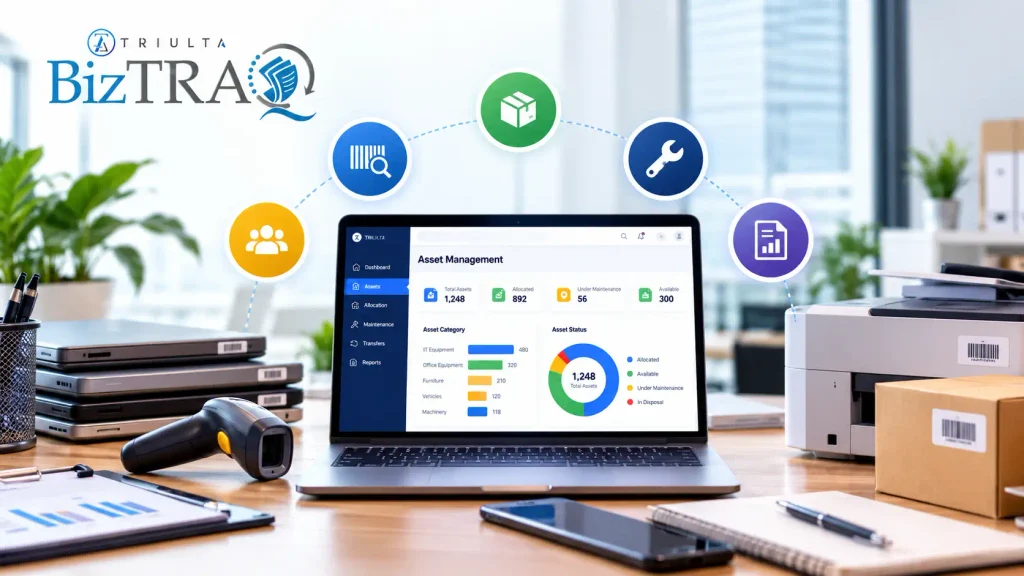
BizTRAQ is a cloud-based Business Information Platform that brings business information, documents, records, and processes together in one connected environment. Its asset management business solution helps organizations manage the asset lifecycle, from acquisition and registration to allocation, maintenance, transfer, and disposal.
7 Common Business Asset Management Challenges and How to Overcome Them
1. Poor Asset Tracking and Visibility
One of the most common challenges is knowing where company assets are located. When employees move equipment between departments or office locations without updating records, managers can lose track of important resources.
For example, a company may purchase new laptops for its employees but fail to maintain an accurate record of their assignments. Later, the IT team may struggle to identify who is using a particular device.
How to overcome it:
- Maintain a centralized asset register.
- Record asset locations, assignments, and ownership.
- Update asset information whenever equipment moves.
- Review asset records regularly.
With better visibility, managers can identify available resources, locate assigned equipment, and reduce unnecessary purchases.
2. Inaccurate or Incomplete Asset Records
Outdated records can create problems for finance, operations, and management teams. Missing purchase details, incorrect asset values, and incomplete documentation can make audits and financial reporting more difficult.
When asset information is stored across spreadsheets, emails, and separate documents, keeping everything consistent becomes increasingly challenging.
How to overcome it:
Create a consistent process for recording asset details, including acquisition dates, purchase costs, assigned departments, maintenance history, and current status. Assign responsibility for updating records whenever information changes.
A centralized information environment also makes it easier for authorized employees to access relevant documentation without searching through multiple locations.
3. Unclear Asset Ownership and Accountability
When nobody is clearly responsible for an asset, it becomes easier for equipment to be misplaced, neglected, or misused. This problem often occurs when businesses distribute assets across multiple employees, departments, or locations.
For instance, if a company laptop is transferred to another employee without updating its assignment record, the organization may struggle to establish who is responsible for it.
How to overcome it:
- Assign assets to specific employees or departments.
- Define responsibility for asset care and reporting.
- Document asset transfers and returns.
- Review assignments when employees change roles or leave.
Clear accountability encourages employees to take better care of company resources and helps managers maintain stronger internal controls.
4. Inefficient Asset Allocation and Utilization
Businesses sometimes purchase additional equipment without realizing that similar assets are already available elsewhere in the organization. At the same time, some departments may have unused resources while others face shortages.
This creates unnecessary spending and reduces the value businesses receive from their existing assets.
How to overcome it:
Review asset assignments, availability, and usage before approving new purchases. Establish a process for transferring underutilized assets to departments that need them.
Effective Business Asset Management helps organizations understand how their resources are distributed and identify opportunities to improve utilization.
5. Poor Asset Maintenance Planning
Equipment that does not receive appropriate maintenance may experience unexpected failures, reduced performance, or shorter useful lifespans. Businesses that rely only on reactive repairs may also face avoidable downtime and unplanned expenses.
Without accessible service records, it can be difficult to determine when equipment was last inspected or what maintenance it requires.
How to overcome it:
- Establish preventive maintenance schedules.
- Maintain service and repair histories.
- Record asset condition and maintenance requirements.
- Assign responsibility for inspections and follow-up.
A structured maintenance process helps organizations plan service activities, monitor equipment condition, and reduce disruptions to daily operations.
6. Asset Loss, Misuse, and Unrecorded Transfers
Assets may become lost or misused when employees move equipment without authorization or fail to document changes. These problems can be especially difficult to manage in organizations with multiple branches, warehouses, or operational sites.
Poor documentation can also make it harder to identify discrepancies during internal reviews.
How to overcome it:
Introduce clear asset transfer procedures, maintain movement records, and establish appropriate access and approval controls. Conduct periodic physical checks and compare the findings against official asset records.
These measures improve accountability and help businesses identify discrepancies before they become larger problems.
7. Limited Reporting and Management Oversight
Business leaders need reliable information to make decisions about purchasing, maintenance, replacement, and resource allocation. When asset information is incomplete or scattered, producing accurate reports can require significant manual work.
This makes it harder to understand asset values, identify underutilized resources, or plan future investments.
How to overcome it:
Maintain organized asset records and use reporting tools that provide visibility into asset value, usage, condition, and performance. Review relevant information regularly and connect asset data with procurement and financial processes where appropriate.
Better reporting enables managers to make more informed decisions and identify opportunities to improve operational efficiency.
How BizTRAQ Asset Management Helps Your Business
BizTRAQ is a Business Information Platform designed to bring business information, documents, and processes together in a connected environment. Rather than treating every business function as an isolated application, it enables organizations to configure business solutions around their operational requirements.
Its asset management business solution supports several important activities:
Centralized asset records: Keep asset information organized so authorized teams can find relevant records and documentation more easily.
Asset tracking and allocation: Track asset locations, ownership, and assignments to improve visibility and accountability.
Depreciation and financial tracking: Support asset depreciation calculations and maintain relevant financial records.
Maintenance scheduling: Organize preventive maintenance activities and keep service histories accessible.
Asset transfer and disposal: Document asset movements and manage the transfer or disposal process more consistently.
Reports and asset analytics: Review information about asset value, usage, and performance to support better business decisions.
BizTRAQ also connects asset information with procurement and finance processes, helping organizations improve operational transparency and maintain more consistent business records.
For growing organizations, this connected approach can reduce reliance on scattered spreadsheets and manual logs while helping different departments work with relevant, organized information.
Learn more about the BizTRAQ Asset Management business solution.
Best Practices for Better Business Asset Management
Businesses can improve their asset management processes by following a few practical principles:
- Standardize asset records: Use consistent information fields and naming conventions.
- Assign clear responsibilities: Make asset ownership and record maintenance responsibilities explicit.
- Review asset utilization: Identify unused or underutilized resources before purchasing replacements.
- Schedule regular maintenance: Track service requirements and repair histories.
- Document asset movements: Record transfers, assignments, and disposals.
- Improve reporting: Use reliable asset information to support financial and operational planning.
- Connect business processes: Link asset records with relevant procurement, finance, and documentation workflows.
These practices help organizations establish a more structured approach to managing resources while improving visibility across departments.
Conclusion
Business Asset Management is not just about maintaining an inventory of company equipment. It involves creating reliable processes for tracking assets, assigning responsibility, planning maintenance, managing costs, and supporting better decisions.
By addressing poor tracking, inaccurate records, unclear ownership, inefficient allocation, maintenance gaps, asset loss, and limited reporting, organizations can build stronger operational controls.
BizTRAQ supports this effort through its Asset Management business solution, which helps organizations organize asset records, manage the asset lifecycle, monitor assignments, schedule maintenance, and connect asset information with procurement and finance processes.
If your business is still relying on scattered spreadsheets and manual records, explore BizTRAQ Asset Management to discover how a connected business information platform can support more organized and efficient asset management.
